TAKING UP SPACE
Taking up space, a definition:
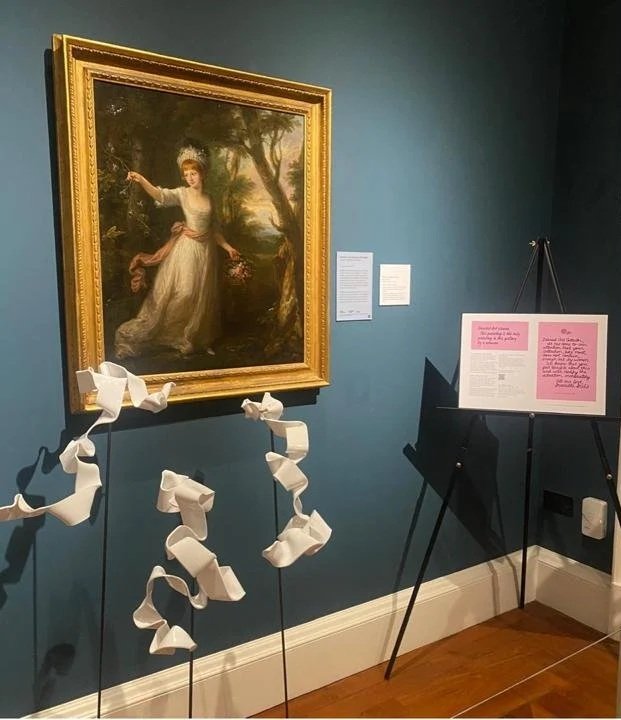
Allowing yourself to be seen and heard. Having the courage to occupy the space you rightly deserve. Women in art still battle for equal space in the media, galleries and exhibitions.
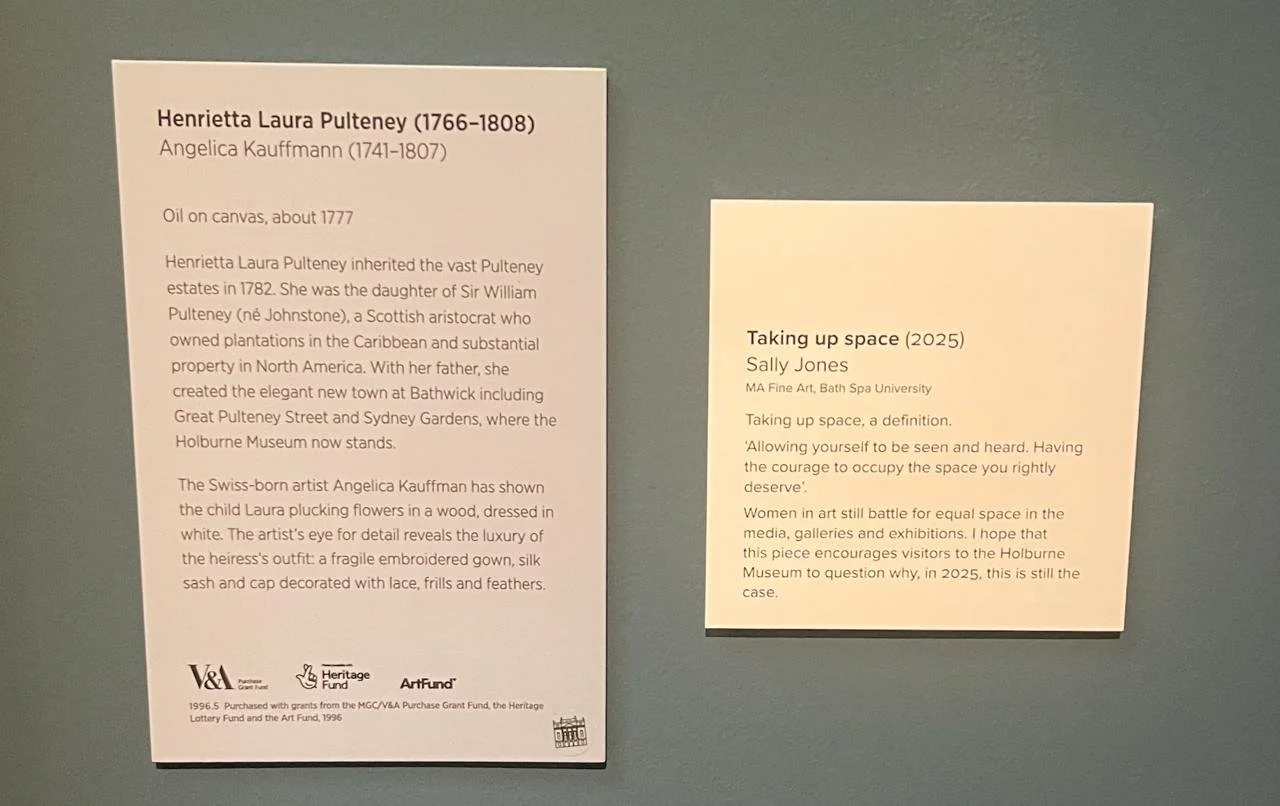
Holburne Museum, Bath, UK (2025)
Acrylic, metal, brick and text
Referencing THE GUERRILLA GIRLS “DEAREST ART COLLECTOR” 1986
Active since the 1980s The Guerrilla Girls are anonymous artist activists who use disruptive headlines, outrageous visuals and killer statistics to expose gender, ethnic bias and corruption in art, film, politics and pop culture.
In June 2025, in the Brownsword Gallery at the Holburne Museum in Bath, only one of the twenty-six paintings on display was by a woman. This installation responds directly to that gallery hang. The white acrylic ribbons extend the original painting into the surrounding space, physically expanding its presence and claiming more room within the gallery.
Dearest Art Collector,
It has come to our attention that your collection, like most, does not contain enough art by women.
We know that you feel terrible about this and will rectify the situation immediately.
All our love,
Guerrilla Girls.
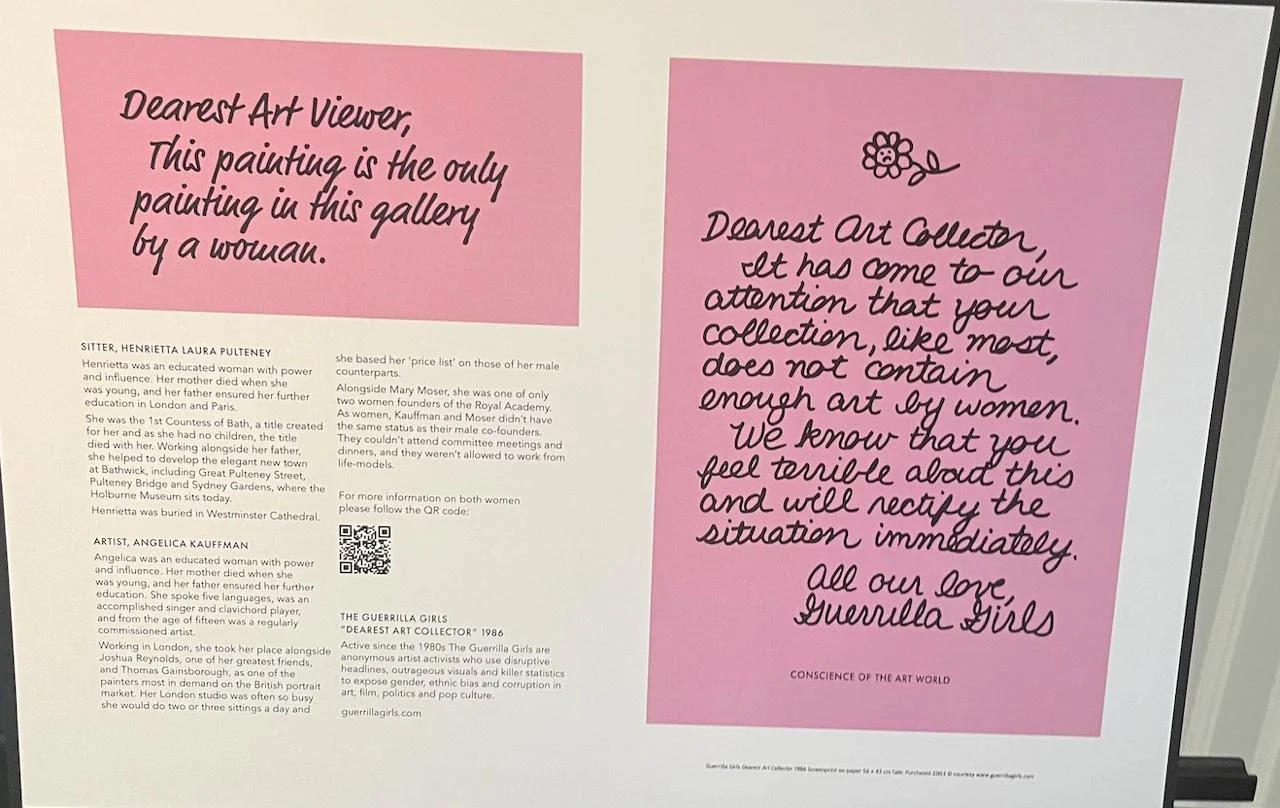
SITTER, HENRIETTA LAURA PULTENEY
Henrietta was an educated woman with power and influence. Her mother died when she was young, and her father ensured her further education in London and Paris.
She was the 1st Countess of Bath, a title created for her and as she had no children, the title died with her. Working alongside her father, she helped to develop the elegant new town at Bathwick, including Great Pulteney Street, Pulteney Bridge and Sydney Gardens, where the Holburne Museum sits today.
Henrietta was buried in Westminster Cathedral.
ARTIST, ANGELICA KAUFFMAN
Angelica was an educated woman with power and influence. Her mother died when she was young, and her father ensured her further education. She spoke five languages, was an accomplished singer and clavichord player, and from the age of fifteen was a regularly commissioned artist.
Working in London, she took her place alongside Joshua Reynolds, one of her greatest friends, and Thomas Gainsborough, as one of the painters most in demand on the British portrait market. Her London studio was often so busy she would do two or three sittings a day and she based her ‘price list’ on those of her male counterparts.
Alongside Mary Moser, she was one of only two women founders of the Royal Academy. As women, Kauffman and Moser didn’t have the same status as their male co-founders. They couldn’t attend committee meetings and dinners, and they weren’t allowed to work from life-models.